

Durban Botanic Gardens:
Africa’s oldest surviving botanic garden – The gardens were established in 1849, making them the oldest surviving botanical gardens on the African continent.
They moved to their current site in 1851 – The original gardens were located near the Umgeni River but were relocated to the Berea because the first site was prone to flooding and even had hippos and crocodiles nearby.
They cover 15 hectares – Despite being in the heart of Durban, the gardens span about 15 hectares of beautifully landscaped subtropical greenery.
Home to rare plant collections – The gardens are internationally known for their collections of cycads, orchids, palms, and bromeliads, including several rare and threatened species.


Historic heritage trees – Around 80 heritage trees, many more than a century old, can be found throughout the gardens, creating a living museum of botanical history.
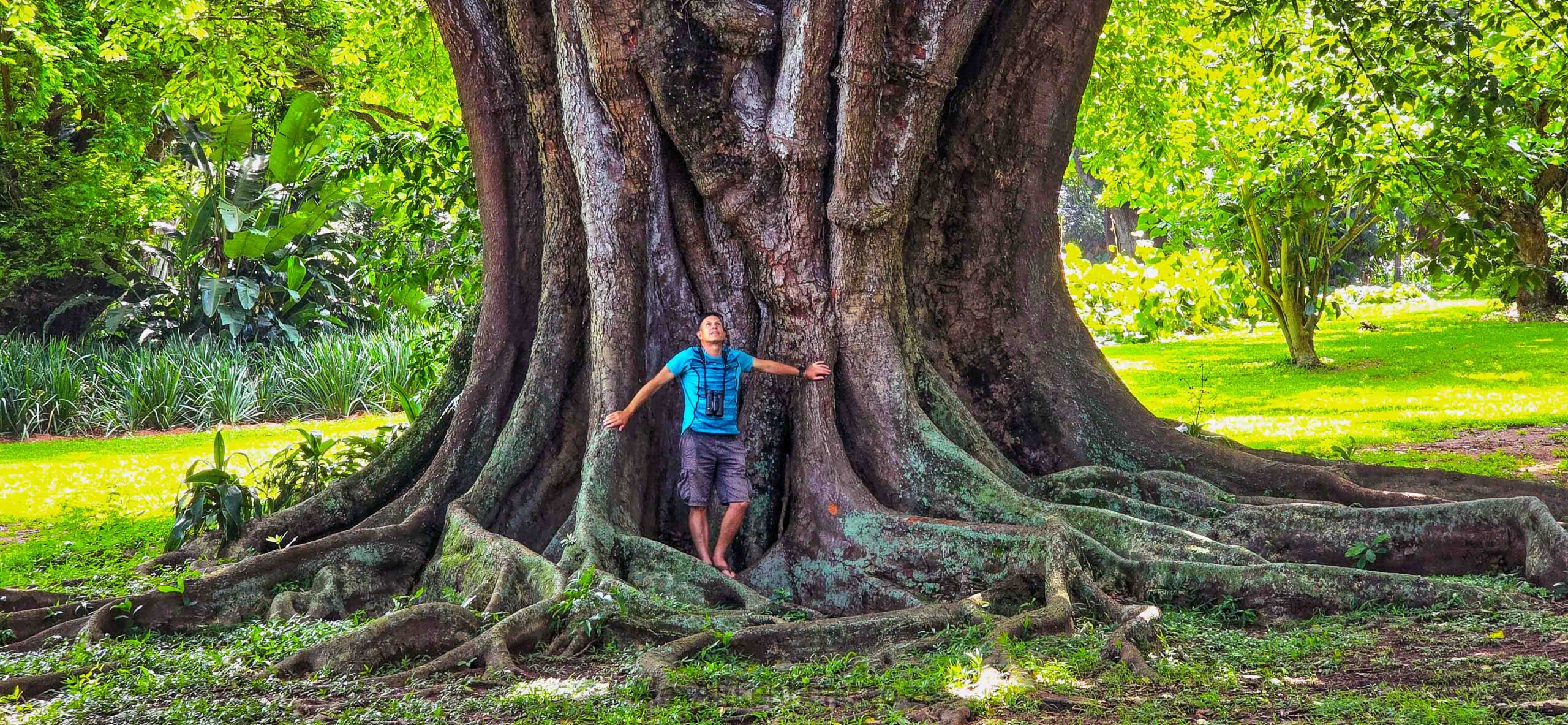
The famous Banyan Tree – One of the garden’s biggest attractions is its enormous Banyan Tree, planted in 1871. It is one of Durban’s most photographed natural landmarks.
Linked to scientific discovery, the gardens played an important role in South African botany. Curator John Medley Wood helped establish the KwaZulu-Natal Herbarium and contributed significantly to the study of the region’s plants. S
Birthplace of agricultural experiments – The gardens were created to test the cultivation of useful crops that might thrive in the colony, before evolving into a centre for conservation and education.
A popular cultural venue – Besides plants, the gardens regularly host outdoor concerts, picnics, seasonal plant fairs, and other community events, making them one of Durban’s favourite recreational spaces.
Free to visit – Unlike many famous botanical gardens around the world, the Durban Botanic Gardens has traditionally offered free public entry, making it an accessible attraction for both locals and tourists.

10 most important trees in the Durban Botanic Gardens, based on their botanical significance, heritage value, rarity, and prominence in the Gardens. These are widely regarded as the standout specimens:
Most Botanic Gardens choose one or several plant groups for their collections. This showcases the wide varieties possible within that plant group, such as orchids, tree ferns and so forth. This also makes it easier to know what to accept or plant in your garden.
Special collections serve to further knowledge and specialist requirements. As a sub-tropical garden, the plants that are covered below grow in climates suitable to our own. In our hot, humid climate, it is easier to heat artificial growing structures than to keep them cool.
ORCHIDS
The Orchid collection in the Durban Botanic Gardens is one of the few that is held by a Municipal botanic garden in South Africa.
More than 75 natural and man-made genera are grown in the nearby shade houses and are placed on display in the Tropical Display House for all to enjoy. Different orchids flower at different times of the year, creating a wonderland of colour, vibrancy and perfumes all year round.
The orchids are looked after by Special Collections Horticulturist, Muhammad Adamjee. The collection is mainly exotic, to supply the tropical ‘wow factor’, but also includes some indigenous orchids which are being grown as part of our conservation initiative.
Combined with the orchids are bromeliads and other tropical plants, which add to the atmosphere and provide a constant background of foliage and colour.

PALMS
The Durban Botanic Gardens is proud of its Palm collection, which punctuates the landscape with an array of trees.
Palms hail from the tropical regions of the world, with most occurring between the Tropics of Cancer and Capricorn.
They belong to the family of Monocotyledons related to reeds and grasses. South Africa has only five different indigenous palm trees that naturally occur in our country.
The oldest surviving palm in the garden was planted in 1873 behind the Tea kiosk – Hyphaene coriacea [Lalla Palm]. The other old palms make up part of the Palm Avenue found inside the fence but along Edith Benson Road. The tallest palms were planted around 1889 and the remainder over the years that followed.
Edith Benson Road was constructed in 1935, and the Syagrus palms were planted along the road. Many of these were replaced in 1986 with Washingtonia robusta palms due to the high vehicle accident rate and many palms being damaged.

CYCADS
These are some of the oldest living plants, dating back from the Mesozoic up to the Jurassic period, around 160 million years ago. Our indigenous cycads come from the genera Encephalartos and Stangeria, and are all protected under strict Nature Conservation laws which require permits to possess, sell, donate or move them.
The collection covers cycads from South Africa, Africa, Australia, Asia and Central America.
Our rarest cycad is the Encephalartos woodii, which can be seen on each of the four corners of the steps leading up towards the herb garden, near Edith Benson Road.
The first of this species was discovered in 1895 in the wild Ngoye forest in Zululand by the then Curator, John Medley Wood. In 1903 some of these stems were brought back to the Gardens by his assistant, James Wylie. This protected cycad species is now extinct in the wild.

TREES / ARBORETUM
The trees form the backbone and the beauty of the Gardens. Many are over 100 years old, and these are named “Centenary Trees”. We have around 90 centenary trees listed, with the ages of more being verified.
The majority of the old trees are exotics. Many years ago, settlers were interested in growing plants from distant shores for economic purposes such as tea, coffee and rubber, as well as being influenced by the trend of the Victorian Plant Collecting frenzy at the time.
The Gardens boast a beautiful old indigenous tree: Ziziphus mucronata [Buffalo Thorn / uMphafa].
This is the last remaining tree that would have been part of the original coastal forest, which occurred before the emerging development of houses and roads destroyed the surrounding bush and forest. This tree, we hope, will be recognised as a Heritage Tree by the Department of Agriculture and Forestry. This can be found at the top of the Garden above the old water reservoir.
Exploring these heritage trees involves several unique and historic specimens:
- The Walking Tree (Indian Banyan – Ficus benghalensis): Native to India, this tree is famous for dropping aerial roots from its branches, which establish themselves as new trunks as they reach the ground.


- Buffalo Thorn (Ziziphus mucronata / uMphafa): The oldest tree in the gardens. It was already a mature adult tree when the gardens opened in 1849, making it a sacred remnant of the original coastal bush.
- Kapok Tree (Ceiba pentandra): Planted in 1934, this massive tree is sometimes called the “Rocket Ship” and produces kapok fibre.

- Cannonball Tree (Couroupita guianensis): A striking, uniquely tropical tree that produces massive, fragrant, fleshy flowers and large, hard fruits that resemble cannonballs directly on its trunk.


- Wood’s Cycad (Encephalartos woodii): One of the rarest plants on earth. Extinct in the wild, the original specimen was discovered in the O’Ngoye Forest in 1895 and is maintained here as a clone.

- Australian Cowry Pine (Agathis robusta): A magnificent, 120+ year old Australian conifer featuring a massive, straight trunk. Sparrow hawks are known to nest in its high branches.

- Lala Palm (Hyphaene coriacea): A beautiful indigenous palm with a sculptural, multi-branched growth habit, used historically by locals in KwaZulu-Natal to produce palm wine.

|
Rank |
Tree |
Why it is important |
|
1 |
Durban Banyan Tree (Ficus benghalensis) |
The Gardens’ most famous tree. Planted in 1871, it is one of South Africa’s National Champion Trees and among the most photographed trees in Durban. Its enormous aerial roots and spreading canopy make it the Gardens’ signature specimen. D Durban.gov.za +1 |
|
2 |
Large Forest Fig (Ficus annulata var. valida) |
Another National Champion Tree. It is the largest tree in Durban by overall size, with a huge crown overlooking the picnic lake. D Durban.gov.za |
|
3 |
Wood’s Cycad (Encephalartos woodii) |
Although technically a cycad rather than a true tree, it is arguably the Gardens’ most scientifically important plant. Extinct in the wild, every living specimen descends from the original male plant discovered by John Medley Wood. W Wikipedia +1 |
|
4 |
Natal Mahogany (Trichilia emetica) |
A magnificent indigenous forest tree representing KwaZulu-Natal’s coastal forests and an important wildlife species. D Durban Botanic Gardens |
|
5 |
Sausage Tree (Kigelia africana) |
Famous for its spectacular flowers and large hanging fruits, making it one of the Gardens’ most recognisable African trees. D Durban Botanic Gardens |
|
6 |
Baobab (Adansonia digitata) |
A celebrated African icon. Although not as massive as northern South African specimens, it is an important educational exhibit. D Durban Botanic Gardens |
|
7 |
Monkey Puzzle Tree (Araucaria araucana) |
A rare South American conifer valued for its unusual prehistoric appearance and botanical interest. D Durban Botanic Gardens |
|
8 |
Norfolk Island Pine (Araucaria heterophylla) |
One of the Gardens’ tallest landmark trees and an important historic planting from the colonial era. D Durban Botanic Gardens |
|
9 |
Rain Tree (Samanea saman) |
A huge shade tree with an expansive umbrella-shaped crown that demonstrates tropical tree architecture. D Durban Botanic Gardens |
|
10 |
African Tulip Tree (Spathodea campanulata) |
Renowned for its brilliant orange-red flowers, making it one of the Gardens’ most striking flowering trees. D Durban Botanic Gardens |


Honourable mentions
- Giant Fever Tree (Vachellia xanthophloea)
- Wild Fig (Ficus natalensis)
- Natal Fig (Ficus sur)
- Various century-old palms in the Palm Collection
- The heritage avenue trees, many of which are over 100 years old. The Gardens contain around 80 heritage trees, reflecting their long history since their establishment in 1849.

General History
- Established in 1849: The gardens were founded during the colonial period to grow and test economically valuable plants such as sugar cane, coffee, tea, and pineapples. They formed part of a global network of botanical gardens linked to the Royal Botanic Gardens, Kew.
- Original location: The first gardens were created on the banks of the Umgeni River. However, flooding and the presence of wildlife such as hippos and crocodiles made the site unsuitable.
- Relocation in 1851: The gardens were moved to their present location on the Berea, where they remain today.

Development
- During the late 1800s, curator John Medley Wood transformed the gardens into a leading centre for botanical research. He established the KwaZulu-Natal Herbarium and collected thousands of indigenous plant specimens, many of which are still used for scientific research.
- The gardens became internationally recognised for their collections of palms, orchids, cycads, and other subtropical plants. One of their most famous specimens is the rare Encephalartos woodii (Wood’s cycad), one of the world’s rarest plants.

Modern Role
Today, the Durban Botanic Gardens cover approximately 15
hectares and focus on:
- Conserving rare and endangered plant species.
- Supporting botanical research.
- Providing environmental education programmes.
- Hosting cultural events, concerts, and community activities.
- Offering visitors a peaceful recreational space in the heart of Durban.

Historical Significance
The Durban Botanic Gardens are significant because they:
- Are the oldest surviving botanical gardens in Africa.
- Have contributed greatly to the study and conservation of South Africa’s plant biodiversity.
- Contain many heritage trees that are over 100 years old.
- Remain an important scientific, educational, and tourist attraction in KwaZulu-Natal.


You might also like


