
Originally photographed over Lourensford Estate, by Kate Morris on 30th January 2021 at 10 am and identified as a Crested Honey Buzzard.
The first record of a Crested (Oriental) Honey Buzzard (Pernis ptilorhynchus) in Southern Africa: 2021
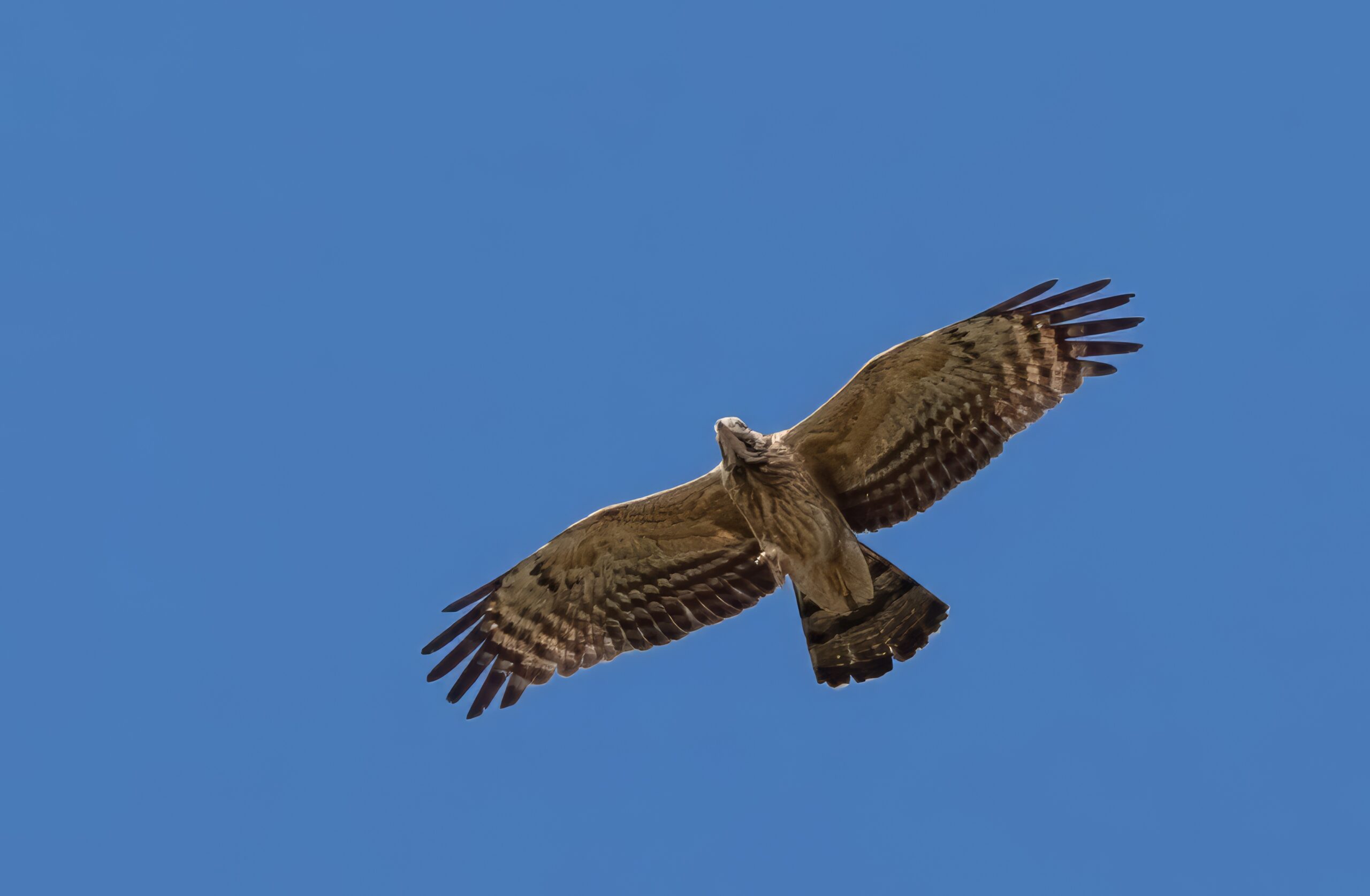
This is the original Image taken by Kate Morris, and later identified as a Hybrid Crested Honey Buzzard, and changed to an official Crested (Oriental) Honey Buzzard

Well done, Kate Morris, it was your discovery that mobilised the birding fraternity to get this on record, what a fantastic record it was.
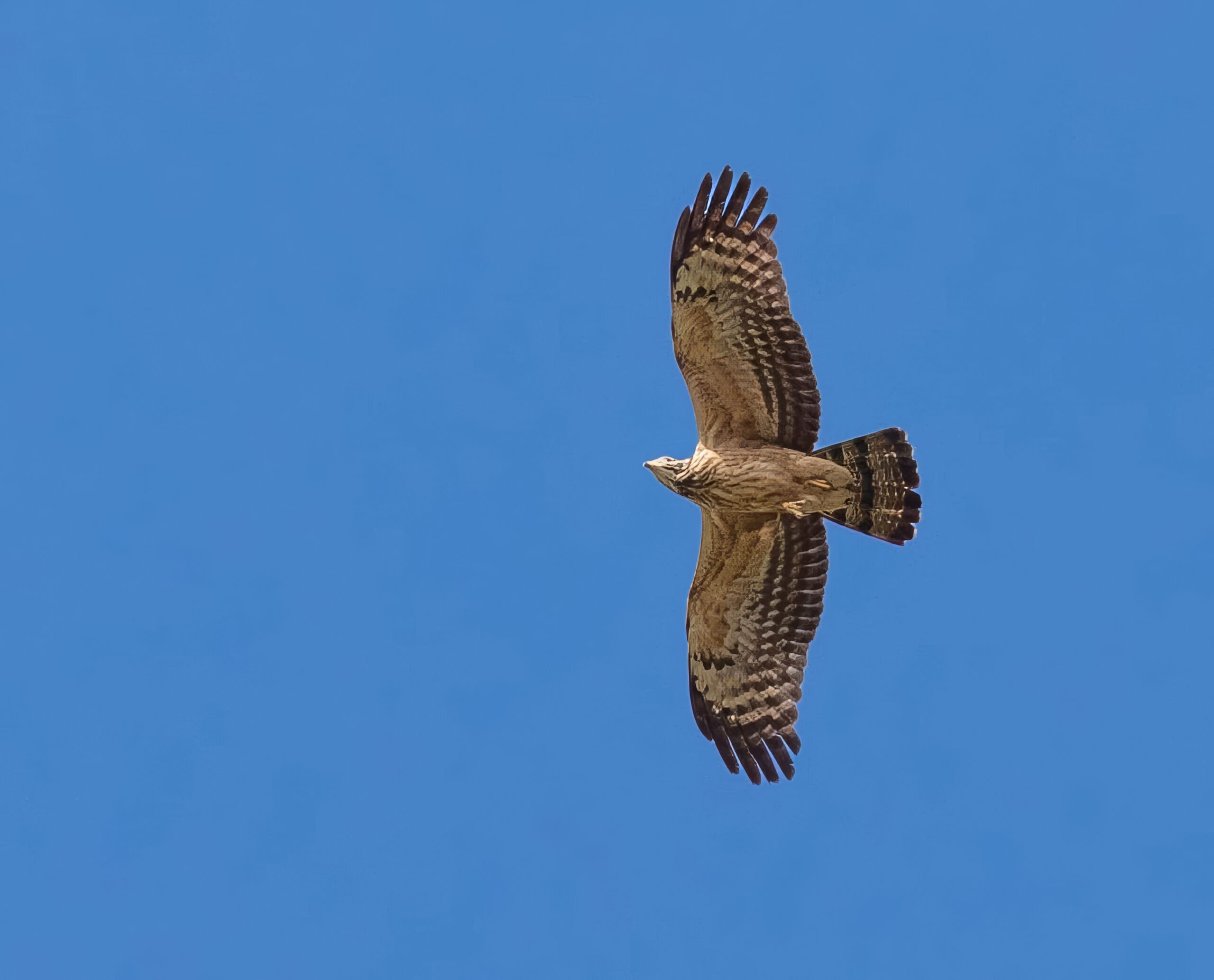
This is the original Image taken by Kate Morris, and later identified as a Hybrid Crested Honey Buzzard, and changed to an official Crested (Oriental) Honey Buzzard
This is the same Crested (Oriental) Honey Buzzard that we captured on the 12th February 2021, after four very anxious attempts to see this first record in Southern Africa. What a performance it gave us, at first distant views, but patience paid off, and it rewarded the huge birding crowd with a remarkable fly-by. You couldn’t have asked for more as it circled above at fairly close proximity and then it slowly moved off, leaving us speechless, hardly able to comprehend what had just happend. Most of the twitchers had been standing on the Spanish Farm hill the whole day, hoping to catch a small, fleeting view, but to see this magnificent raptor circling above was simply awe-inspiring.
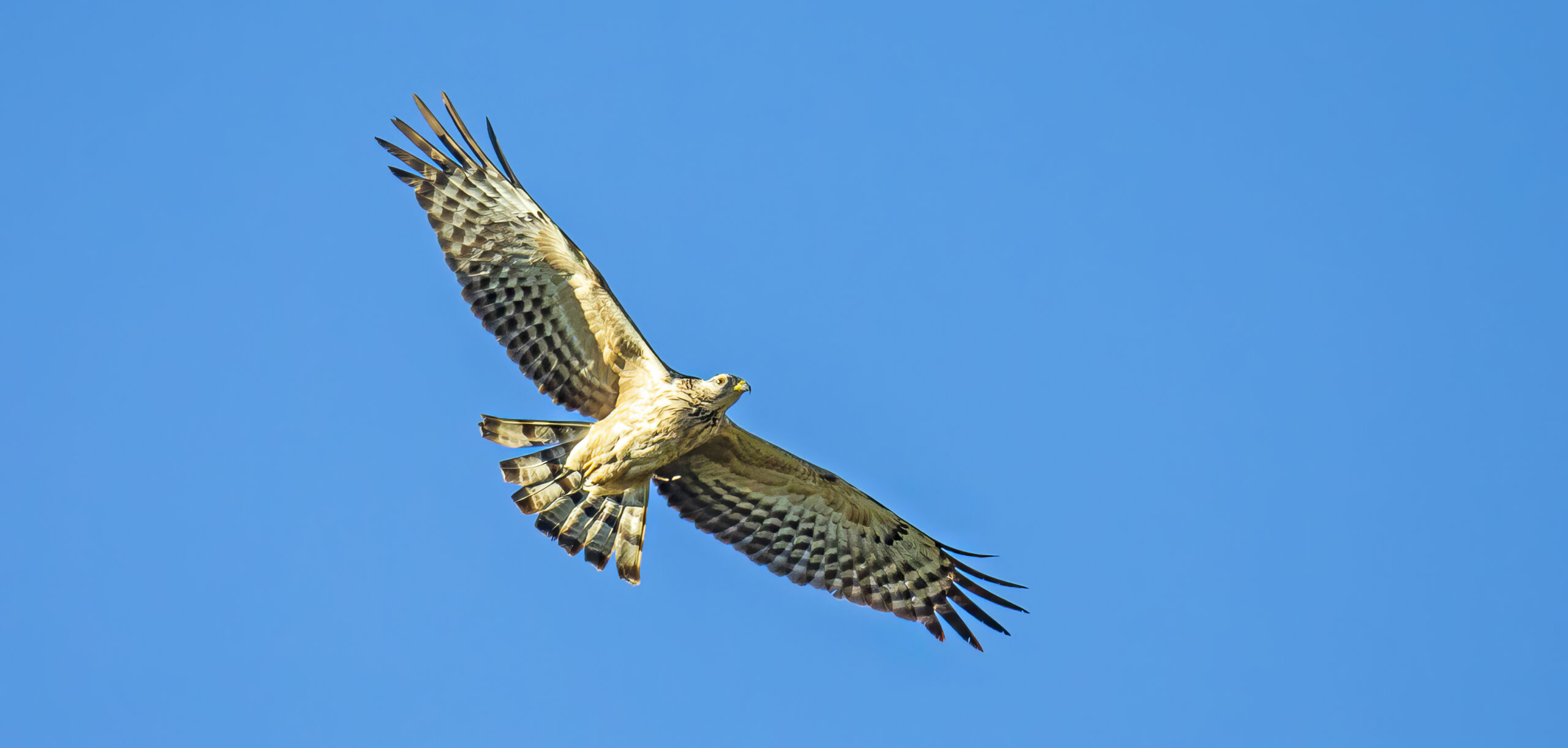
What can one say, we twitched this Raptor on four occasions only to be rewarded with a spectacular fly-by, the Crested Honey Buzzard circled above and then drifted off
| (Crested Honey Buzzard) |

What can one say, we twitched this Raptor on four occasions only to be rewarded with a spectacular fly-by, the Crested Honey Buzzard circled above and then drifted off
| (Crested Honey Buzzard) |
Later in the day, news filtered through that it was a hybrid between a European Honey Buzzard and a Crested Honey Buzzard. This find was submitted to the National Rarities Committee for clarification, as this would be the first encounter of this species in South Africa.

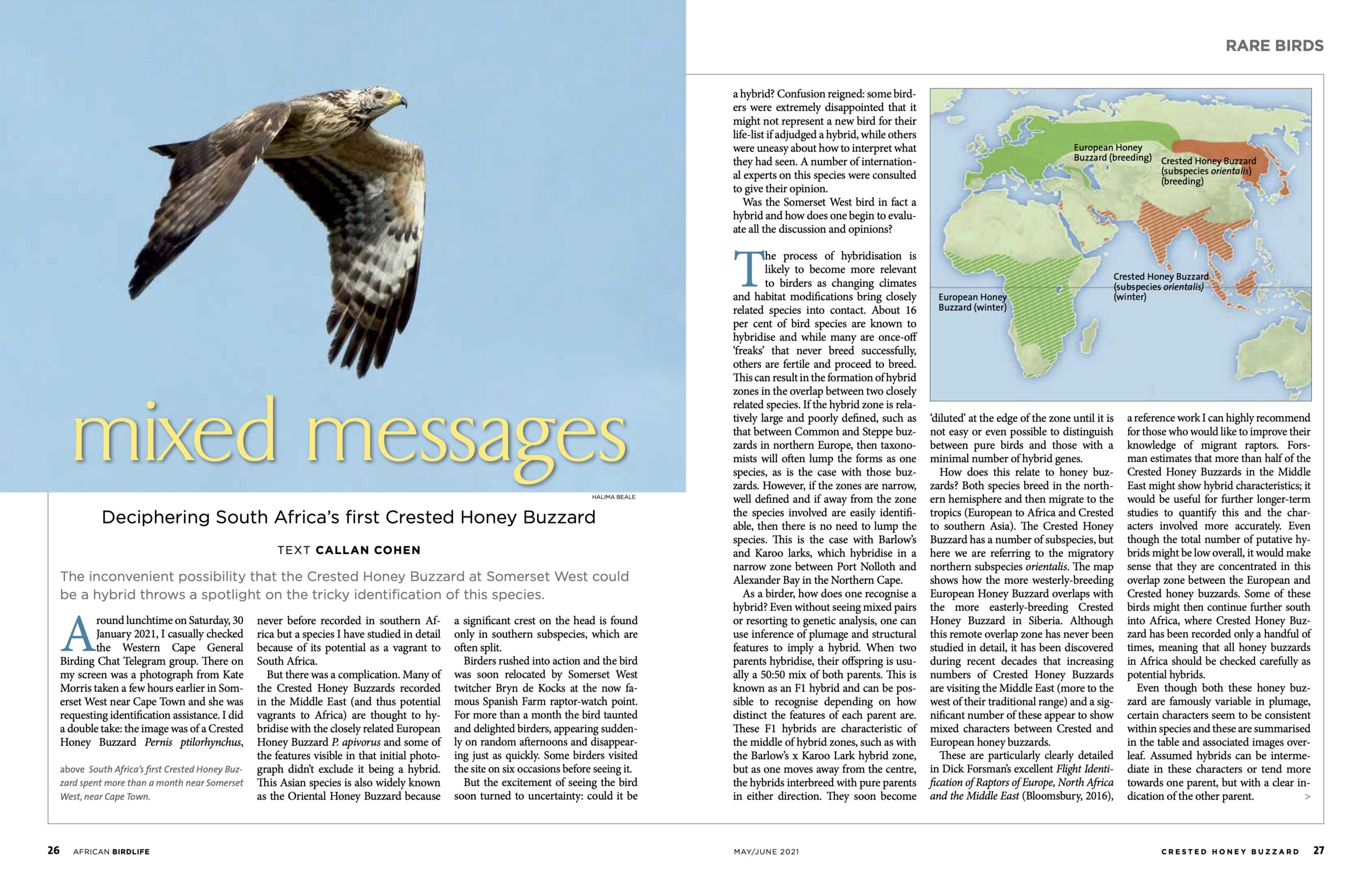
Dr Callan Cohen, who wrote the article for Birdlife South Africa covering the differences between a Crested and European Honey Buzzard


What can one say, we twitched this Raptor on four occasions only to be rewarded with a spectacular fly-by, the Crested Honey Buzzard circled above and then drifted off
| (Crested Honey Buzzard) |
 |
| (African Harrier-Hawk: Gymnogene) |
A MEMORABLE RAPTOR ENCOUNTER AT ALTYDGEDACHT WINE ESTATE (3 JANUARY 2022) OUR STORY:
Situated at a busy intersection in Durbanville, Altydgedacht Wine Estate is surprisingly easy to overlook. The entrance is largely concealed by dense foliage, and the signage is subtle—perhaps the only explanation for why we had never previously visited this remarkable property, despite its location in the heart of the Durbanville wine region.
After reading several reports within the local birding community describing excellent raptor sightings on the farm—particularly accounts of the rare European Honey Buzzard—we decided it was time to explore this unfamiliar estate for ourselves. As weekend birders, we always prefer the sunrise as our starting point. The early hours bring a quiet serenity, when birds and wildlife begin their daily search for food and the landscape slowly awakens with the first light of day.
THE GREAT DEBATE: IS OUR EUROPEAN HONEY BUZZARD A HYBRID CRESTED HONEY BUZZARD? WELL, WE BELIEVE IT IS AND HERE IS WHY.
This is our observation when comparing the two Honey Buzzard species using the comparisons listed by Dr Callan Cohen.
Crested Honey Buzzard vs European Honey Buzzard
Most distinctive features:
A: Long primaries in the outer wing with six fingers in the hand vs five fingers found with the European Honey Buzzard. (definitely true on our bird)
B: No carpal patch vs dark carpal patch. (definitely true on our bird)
C: No ID feature on the gorget
D: Often cinnamon/sandy-coloured underparts vs never in European Honey Buzzard.
E: No distinct broad banding on the tail.
Shape and size:
Eagle-shaped with square wing, broader hand and shorter tail vs curved wing edge, narrow hand and shorter tail.
F: Tail shorter than base of the wing vs longer than base of the wing. (definitely true on our bird)
With a closer look:
G: Dark secondary tips narrower vs wider. (definitely true on our bird)
H: 4-6 secondary bars in juvenile/female vs 3 bars (not visible in the male above)
I: Barring on primary base irregular vs Neat. (definitely true on our bird)
J: Adult males with dark red iris (can appear dark) vs yellow iris
K: Feet and bill larger vs Smaller.
Due to the overlapping of most of the features listed, we have concluded that this Honey Buzzard is, in fact, a Hybrid Crested Honey Buzzard.
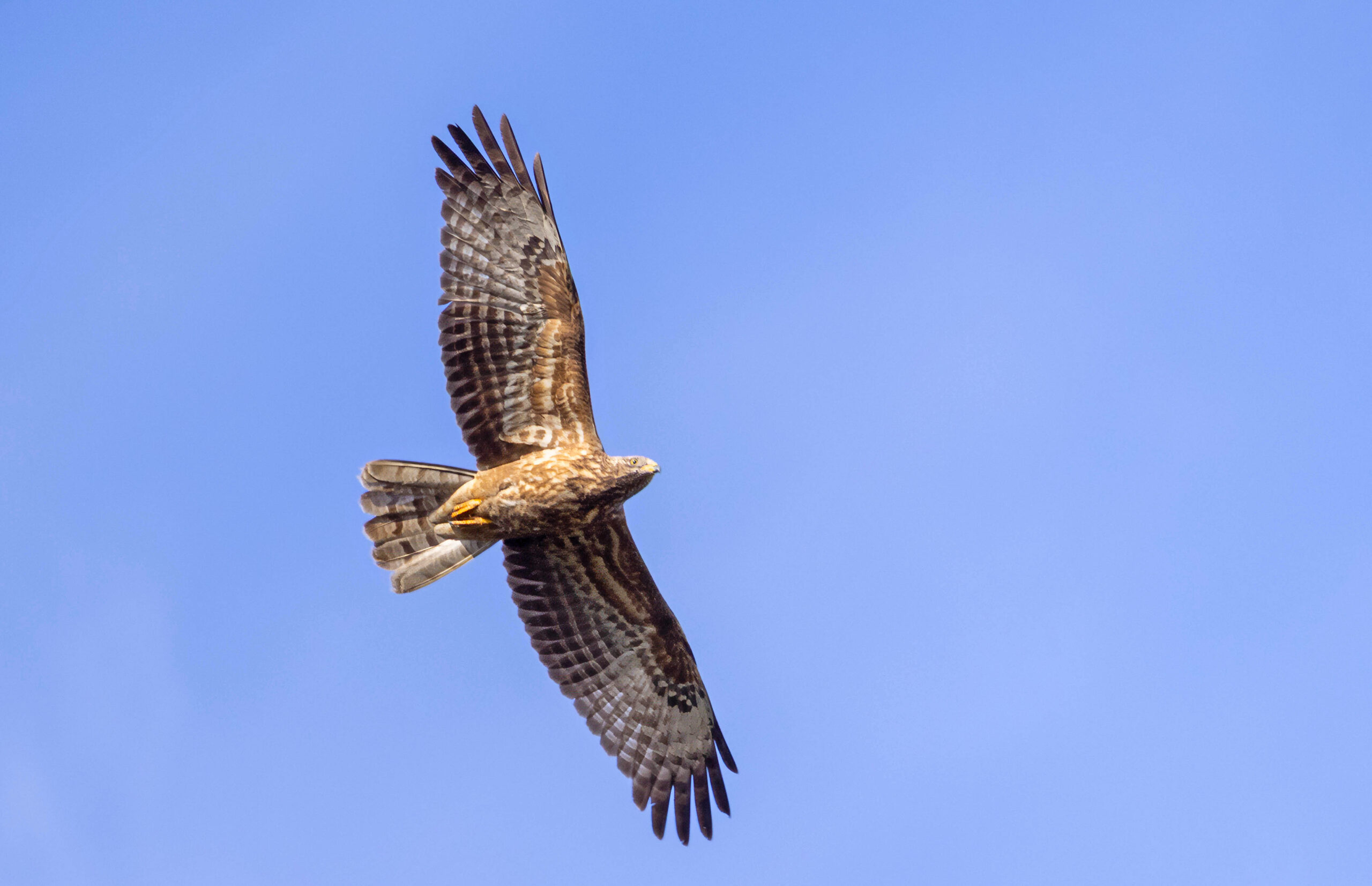
We believe this bird is a Hybrid Crested Honey Buzzard, not a European Honey Buzzard. (Image Taken at Altydgedacht Wine Estate, 3 January 2022

We believe this bird is a Hybrid Crested Honey Buzzard, not a European Honey Buzzard. (Image Taken at Altydgedacht Wine Estate, 3 January 2022

We believe this bird is a Hybrid Crested Honey Buzzard, not a European Honey Buzzard. (Image Taken at Altydgedacht Wine Estate, 3 January 2022
Hybrid or not, most birders across the country were making their way to Somerset West to see if this local celebrity could be relocated. The Spanish Farm view site, just at the foot of the Helderberg Mountain, was the second recording for the CHB.

What can one say, we twitched this Raptor on four occasions only to be rewarded with a spectacular fly-by, the Crested Honey Buzzard circled above and then drifted off
 History was made this day, our fourth attempt to find the elusive Crested Honey Buzzard, good friends, wonderful memories and one incredible Raptor. |
| (Crested Honey Buzzard twitchers) |
Official Confirmation registering the CHB as the first record for South Africa, making this raptor from the orient the highest priority amongst the birding fraternity. Saturday, 6th February, was our first opportunity to get onto the viewing site and hopefully get a glimpse of this famous buzzard. Several birders were already on-site and waiting by the time we arrived. We settled down and were more than pleased with the variety of raptors on view; some had recorded twelve for the day and were searching for that elusive thirteenth, but alas, the CHB didn’t show.
 This is a stunning portrait of a Male Crested Honey Buzzard |
| Crested Honey Buzzard – credit Shantanu Kuveskar |
 |
| (Distribution map for the Crested Honey Buzzard, the first record in South Africa, 30 January 2021)
From Wikipedia, the free encyclopedia Crested honey buzzard Scientific classification Species: P. ptilorhynchus The crested honey buzzard (Pernis ptilorhynchus)[3] is a bird of prey in the family Accipitridae, which also includes many other diurnal raptors such as kites, eagles, and harriers. This species is also known as the Oriental honey buzzard. Despite its name, this species is not related to Buteo buzzards and is taxonomically closer to the kites.[4] It appears long-necked with a small head (resembling that of a pigeon) and soars on flat wings. The head lacks a strong superciliary ridge, giving it a facial appearance unlike that of a raptor. It has a long tail and a short head crest. It is brown above, but not as dark as the European honey buzzard, and paler below. A dark throat stripe is present. Unusually for a large bird of prey, the sexes can be distinguished. The male has a blue-grey head, while the female’s head is brown. She is slightly larger and darker than the male. The male has a black tail with a white band. It breeds in Asia from central Siberia east to Japan. It is a summer migrant to Siberia, wintering in tropical Southeast Asia. Elsewhere, it is more or less resident. It is a specialist feeder, living mainly on the larvae of social bees and wasps, and eating bits of comb and honey;[5] it takes other small insect prey such as cicadas.[6] The crested honey buzzard breeds in woodland and is inconspicuous except in the spring when the mating display includes wing-clapping. The display of roller-coasting in flight and fluttering wings at the peak of the ascent is characteristic of the genus Pernis.[7][8] It is larger and longer-winged than its western counterpart, the European honey buzzard, Pernis apivorus.
|
HERE ARE 10 INTERESTING FACTS ABOUT THE CRESTED HONEY BUZZARD(ORIENTAL HONEY-BUZZARD):
- Its official name
The Crested Honey Buzzard is formally known as the Crested Honey Buzzard (Pernis ptilorhynchus), and is sometimes called the Oriental Honey-buzzard. - Specialist wasp hunter
Unlike most birds of prey, it feeds primarily on wasp and bee larvae, raiding nests both in trees and underground. - Natural armor against stings
It has thick, scale-like facial feathers and tough skin around the head and eyes, helping protect it from angry swarms while feeding. - Distinctive crest
As its name suggests, it can raise a subtle but noticeable crest of feathers, especially when alert or displaying. - Remarkable migration journeys
Northern populations migrate thousands of kilometres between breeding grounds in East Asia and wintering areas in Southeast Asia. - Snake-like head movement
When perched, it often moves its head in a slow, deliberate, almost reptilian manner — possibly mimicking a predator to deter nest raiders. - Soars like an eagle
In flight, it resembles an eagle, with broad wings and a long tail, often soaring high on thermals. - Impressive migration spectacles
Large numbers can be seen during migration over places like Taiwan, where they form dramatic kettles in the sky. - Sexual dimorphism
Males and females can differ in eye colour — males often have red eyes, while females tend to have yellow or brown eyes. - Wide distribution
It ranges from India across Southeast Asia to parts of Japan and eastern Russia, inhabiting forests, woodlands, and even agricultural landscapes.

What can one say, we twitched this Raptor on four occasions only to be rewarded with a spectacular fly-by, the Crested Honey Buzzard circled above and then drifted off
| (Crested Honey Buzzard)
|
What can one say, we twitched this Raptor on four occasions only to be rewarded with a spectacular fly-by, the Crested Honey Buzzard circled above and then drifted off
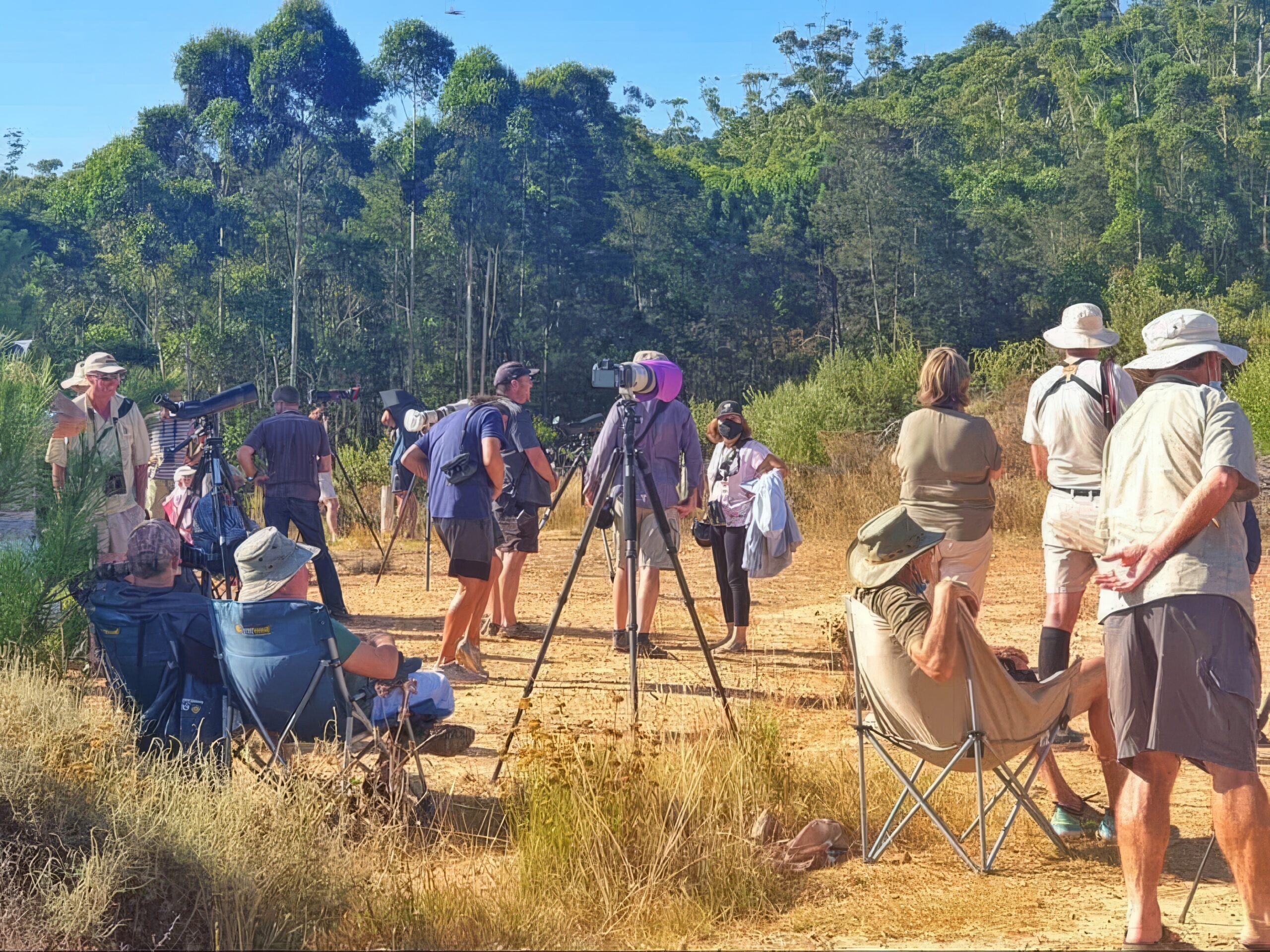
Wonderful capture of the Crested Honey Buzzard Twitch, it was a scorcher, but we waited for hours for the Star of the day to show, and the Raptor did not disappoint. Image by Jacques Giliomee
 What can one say, we twitched this Raptor on four occasions only to be rewarded with a spectacular fly-by, the Crested Honey Buzzard circled above and then drifted off |
| (Crested Honey Buzzard) |
Returning on the 12th, we set up in the blazing heat of February and scanned the skies for our celebrity. Once again, we had excellent raptor sightings, but still no luck with our target raptor. Friday and on-site for our third Twitch, and the pressure was on to find this new record. We departed the scene feeling a little depressed about dipping on this bird.

What can one say, we twitched this Raptor on four occasions only to be rewarded with a spectacular fly-by, the Crested Honey Buzzard circled above and then drifted off
| (Crested Honey Buzzard) |
 |
| (Booted Eagle) |
We decided to commit time to locating the bird over the weekend ahead, as it had now become an obsession to get this record. Arriving early, we were met with the day’s heat, but we were resolute and on a mission to tick off this CHB. Elated when on review we could confirm that the distant showing of another raptor was indeed our bird, excited and now very content, we hoped for a closer flyover to photograph this fantastic bird.
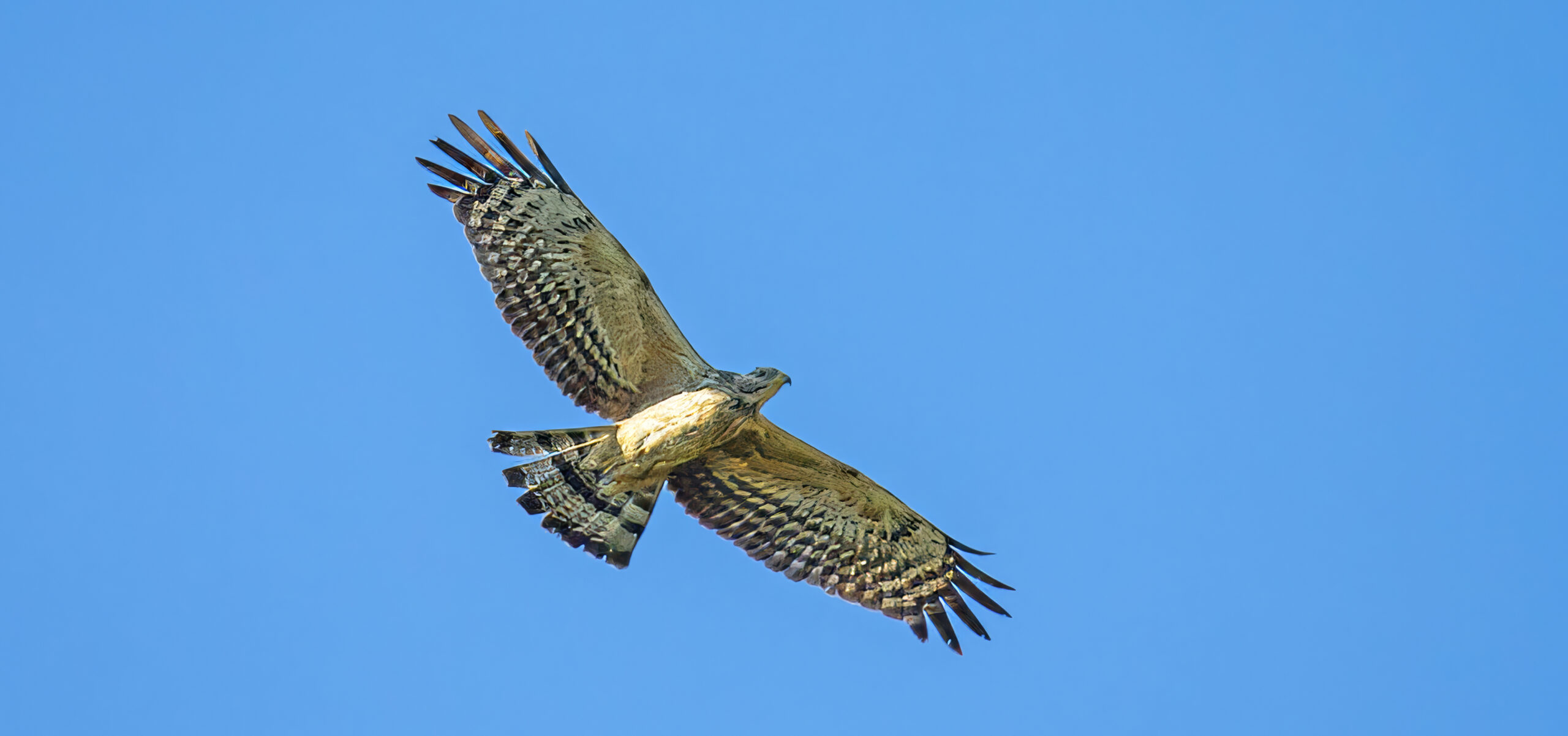
What can one say, we twitched this Raptor on four occasions only to be rewarded with a spectacular fly-by, the Crested Honey Buzzard circled above and then drifted off
| (Crested Honey Buzzard) |
Trembling with excitement, tracking the bird right above us, we could not believe how fortunate we were to have such an excellent showing of the CHB. Along with a large group of birders, the star of the show rewarded us in a very hot Somerset West.
 History was made this day, our fourth attempt to find the elusive Crested Honey Buzzard, good friends, wonderful memories and one incredible Raptor. |
| (Crested Honey Buzzard twitchers) |
Our focus turned to the images taken, and hoping for that one perfect photograph. Content with the results, a reward for our patients and a commitment to getting this record. New friends were made, and we connected with old acquaintances, learning so many interesting facts about the CHB.
What can one say, we twitched this Raptor on four occasions only to be rewarded with a spectacular fly-by, the Crested Honey Buzzard circled above and then drifted off
| (Crested Honey Buzzard) |
What can one say, we twitched this Raptor on four occasions only to be rewarded with a spectacular fly-by, the Crested Honey Buzzard circled above and then drifted off
 |
| (Cape Times Newspaper article, Wednesday, February 17 2021) |
 History was made this day, our fourth attempt to find the elusive Crested Honey Buzzard, good friends, wonderful memories and one incredible Raptor. |
|
|
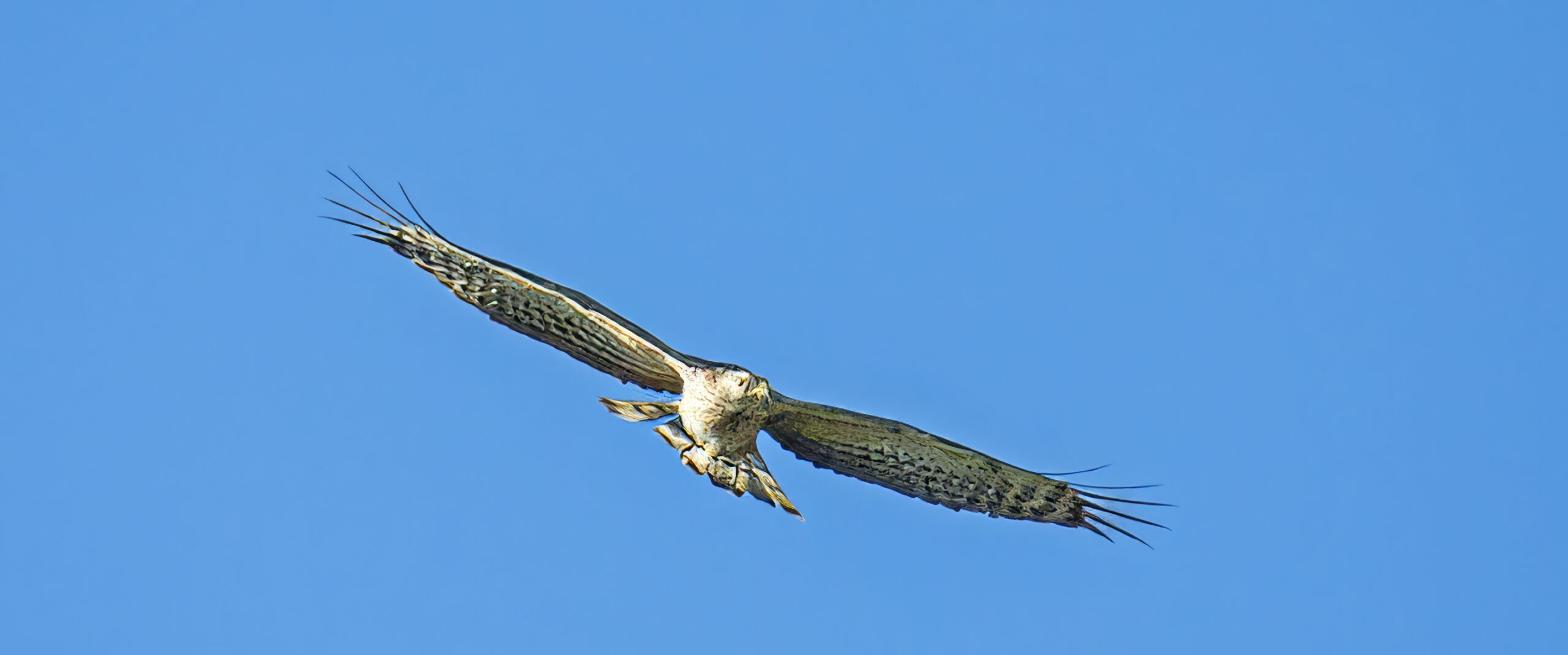
What can one say, we twitched this Raptor on four occasions only to be rewarded with a spectacular fly-by, the Crested Honey Buzzard circled above and then drifted off
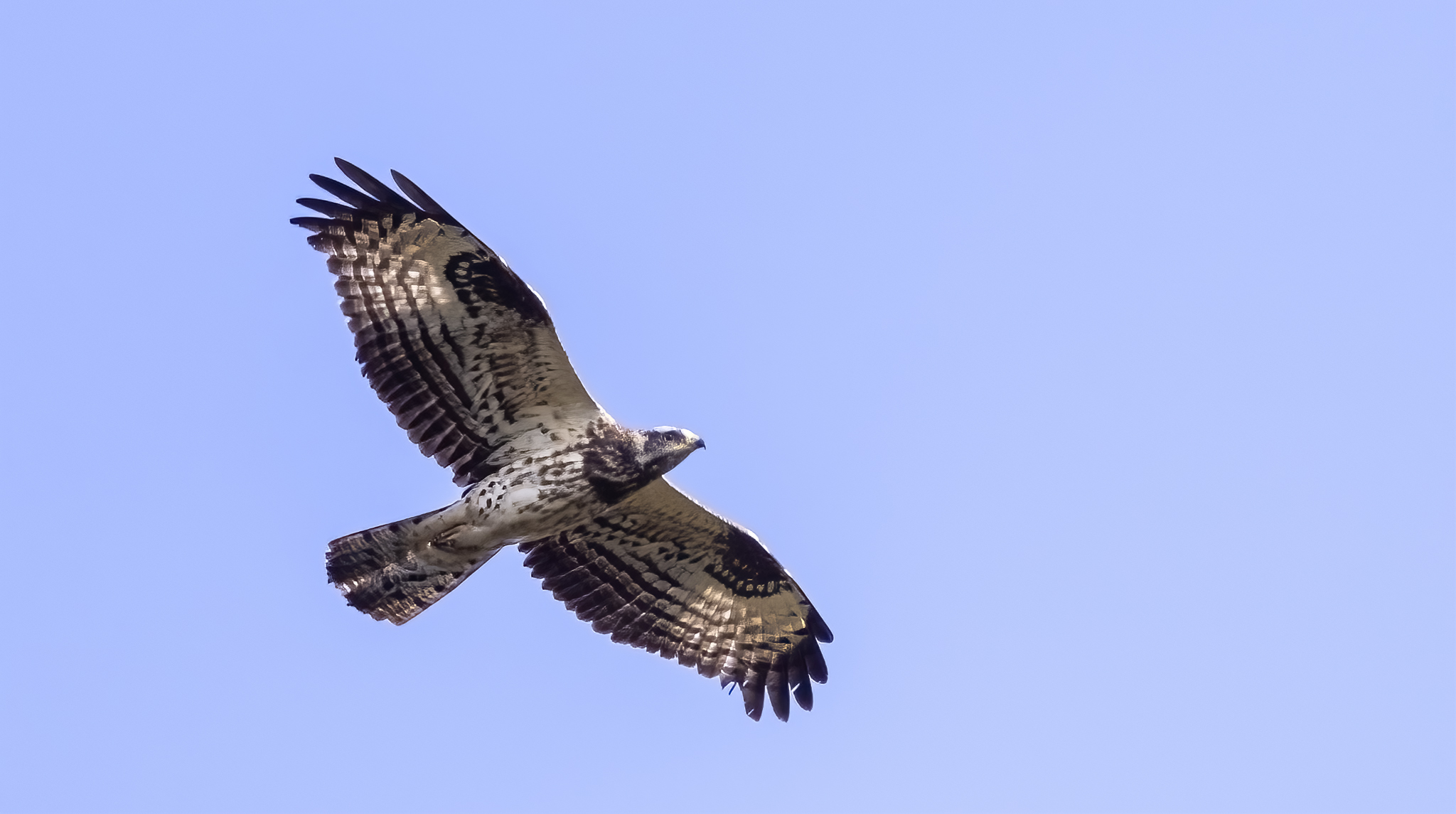
This is a European Honey Buzzard captured at the Altydgedacht Wine Estate one year later. You can appreciate the differences between the two species
 |
| (European Honey Buzzard was seen on the same viewing site, image courtesy of Halima Beale Photography) |
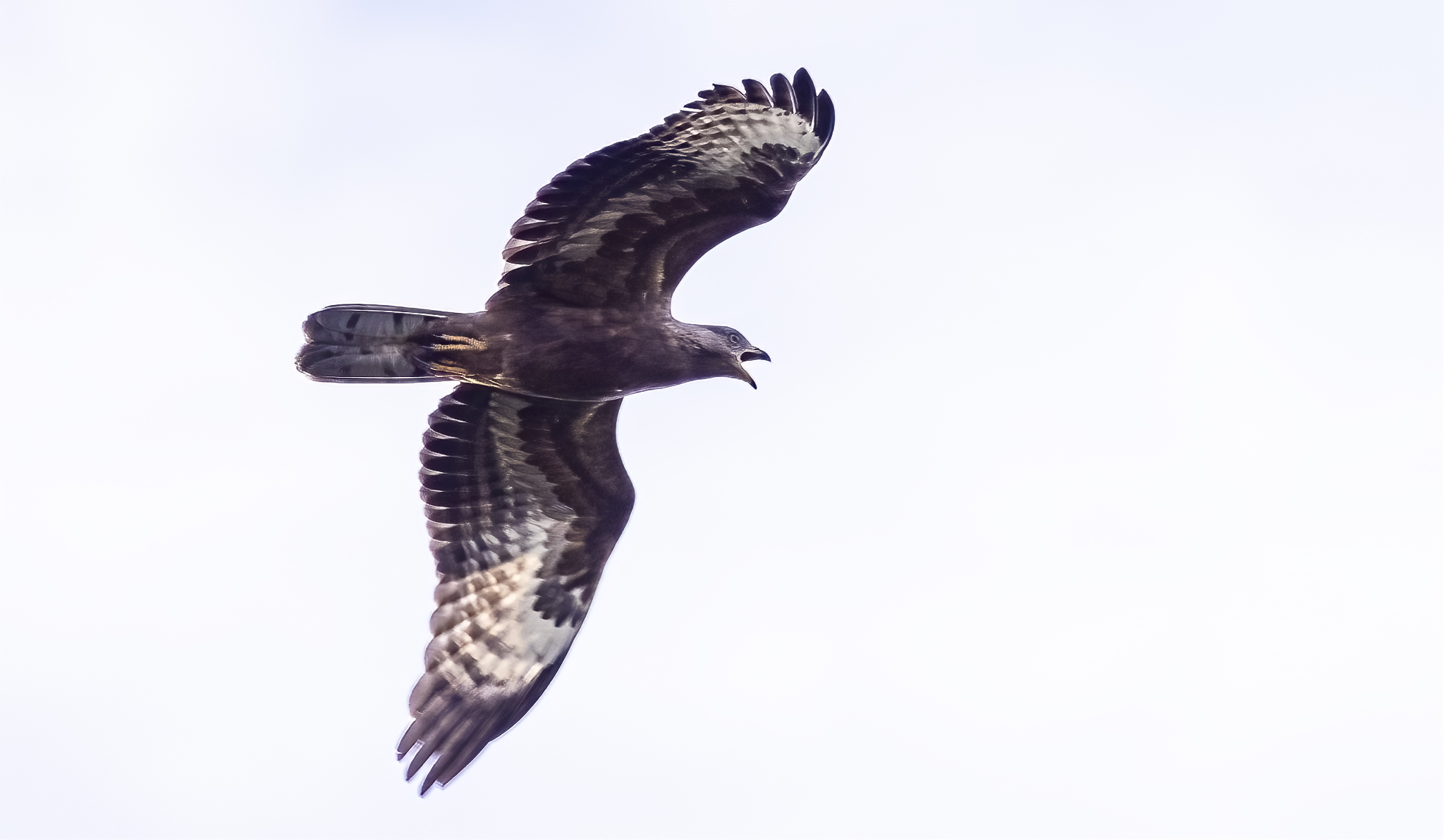
This is a European Honey Buzzard captured at the Altydgedacht Wine Estate one year later. You can appreciate the differences between the two species
 |
| (Yellow Billed Kite: image Courtesy Stephan Wolfart) |
 |
| (Black Sparrowhawk: image Courtesy Stephan Wolfart) |
 |
| (Rufous-breasted Sparrowhawk: image Courtesy Stephan Wolfart) |
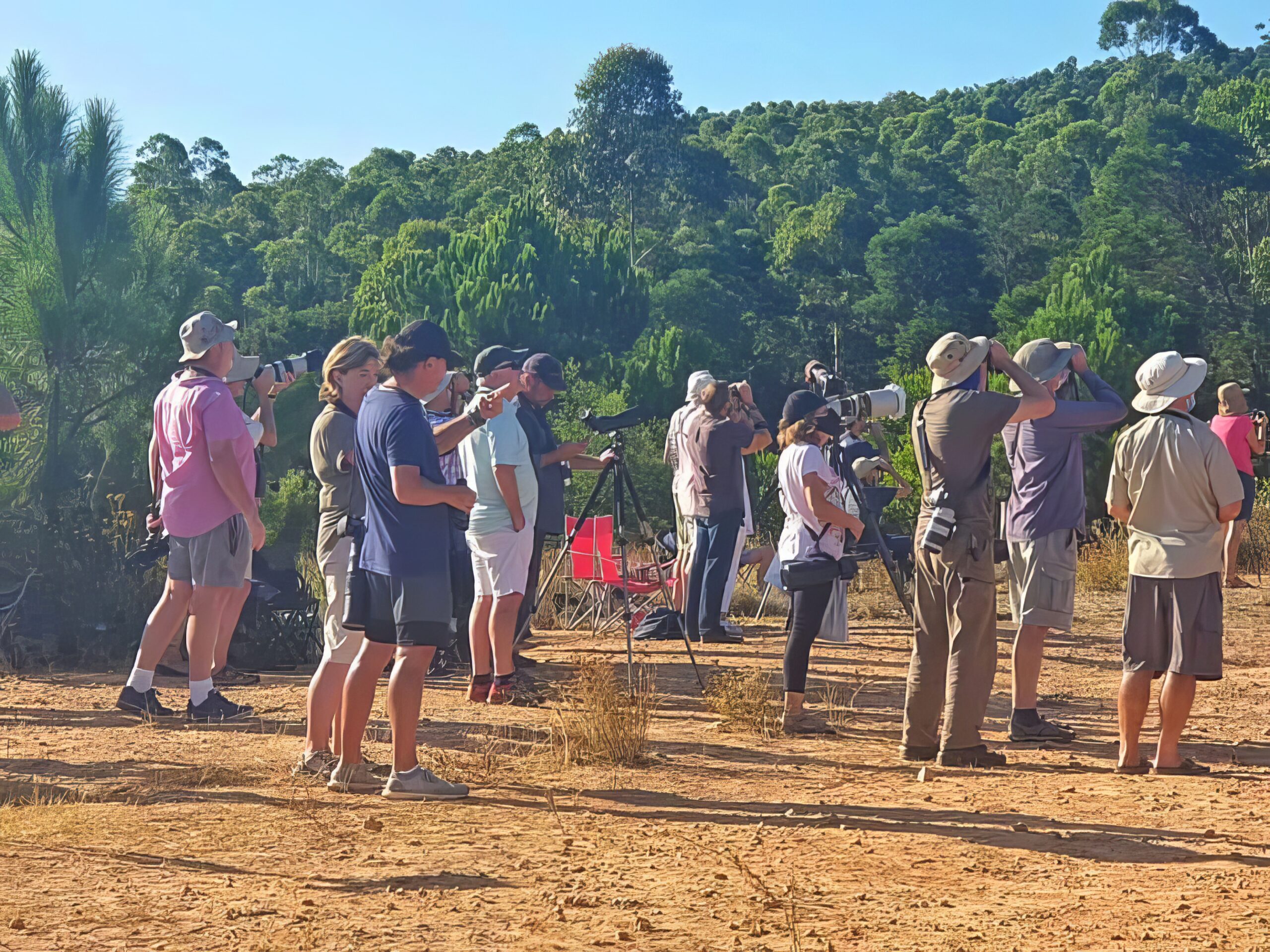
Wonderful capture of the Crested Honey Buzzard Twitch, it was a scorcher, but we waited for hours for the Star of the day to show, and the Raptor did not disappoint. Image by Jacques Giliomee

You might also like


Comment
Awesome Alex! A great article. Definitely my birding highlight! Wonderful that so many birders have been able to see this bird.