

A Hotspot for Chameleon Diversity
Madagascar is home to approximately half of the world’s 150+ chameleon species, spanning both subfamilies: typical chameleons (Chamaeleoninae) and dwarf chameleons (Brookesiinae). These reptiles exhibit an extraordinary range of adaptations, making them some of the most distinctive lizards on the planet.
Physical Characteristics
- Colour Change: Contrary to common belief, chameleons do not primarily change colour to match their surroundings. Instead, colour shifts are used for communication, such as signalling aggression, mating readiness, or stress.
- Eyes: Their eyes move independently, allowing them to survey their surroundings without moving their heads.
- Feet and Tail: Chameleons have grasping feet and, in arboreal species, prehensile tails that help them navigate tree branches.
- Long Tongue: They possess an extensible tongue capable of capturing prey from distances longer than their body length.

How Do Chameleons Change Colour?
Chameleons rely on specialised skin cells to alter their colouration:
- Chromatophores: The uppermost layer of skin contains yellow and red pigments.
- Iridophores: Below the chromatophores, these cells contain nanocrystals that reflect specific wavelengths of light. Adjusting the spacing between these crystals shifts the reflected colour.
- Melanophores: The deepest layer contains melanin, which influences how dark or light the chameleon appears.
Behaviour and Movement
Chameleons are diurnal, solitary reptiles that often display aggression toward members of their own species, indicated by rapid colour changes and body posturing. They are opportunistic hunters that wait for insects or small vertebrates to come within range before striking with their long tongues. Their unusual, slow, rocking movement mimics swaying leaves, helping them avoid detection.


Notable Chameleon Species in Madagascar
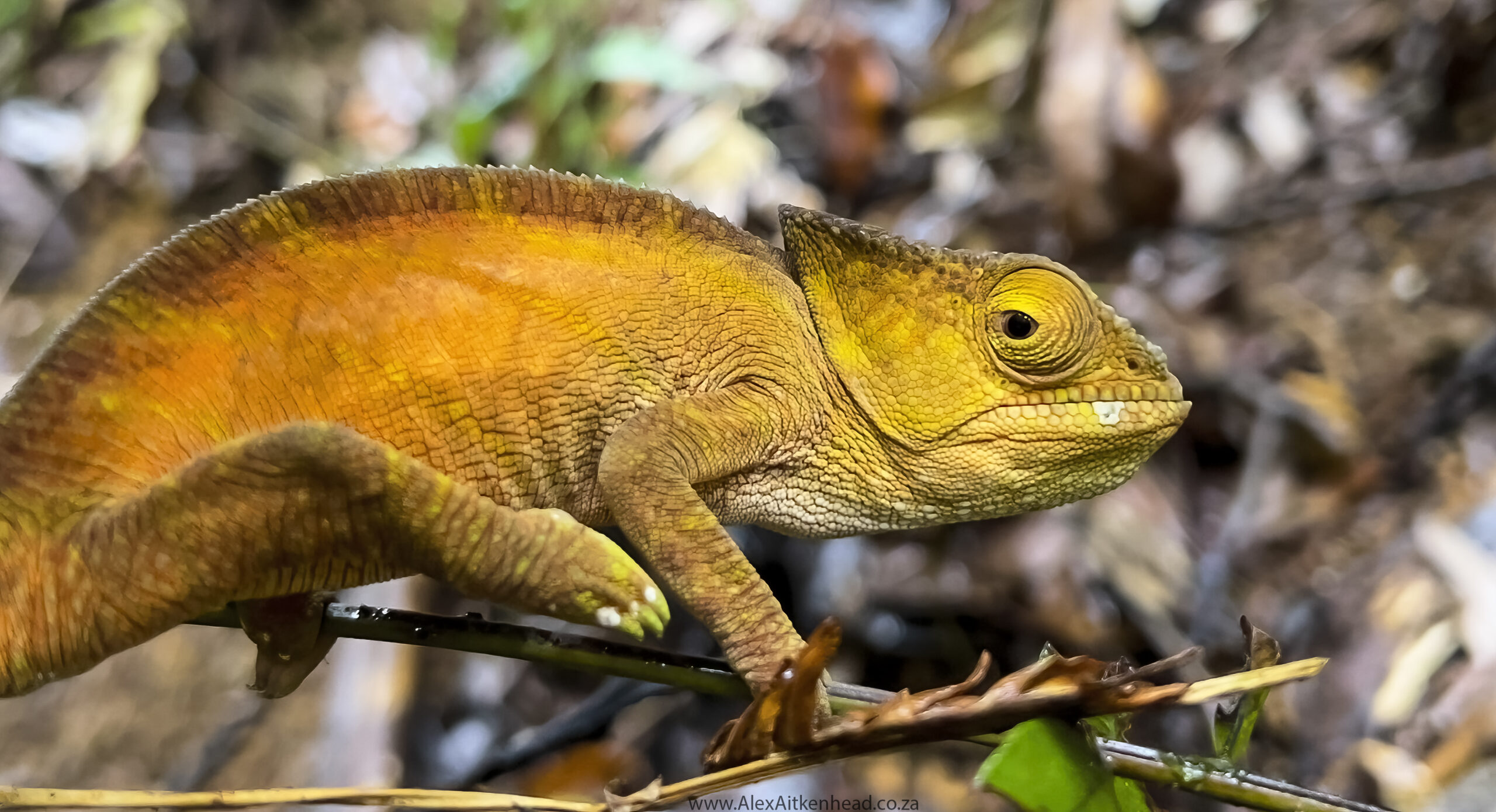
- Parson’s Chameleon (Calumma parsonii): One of the largest chameleons, growing up to 69 cm (27 inches) long.
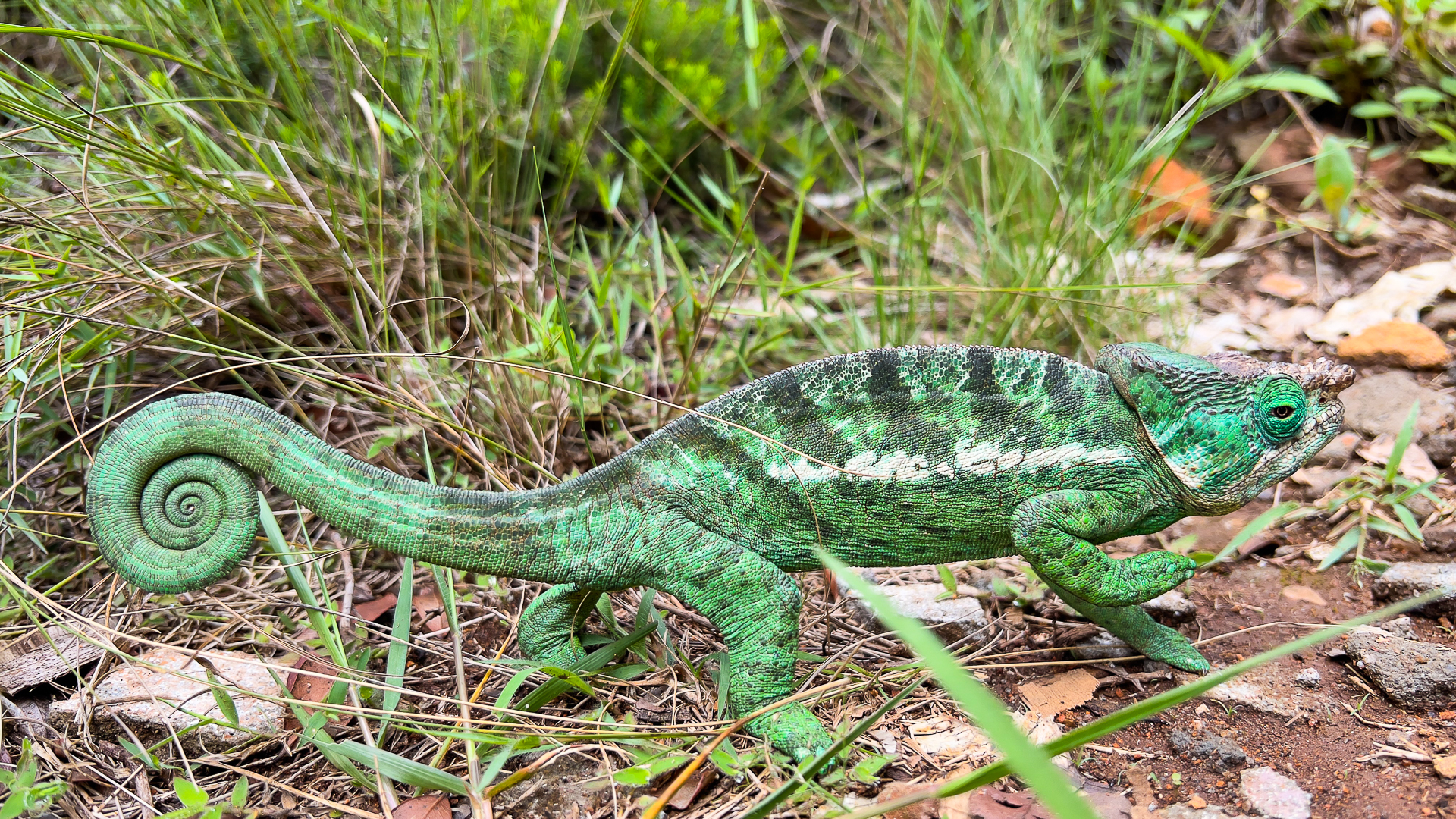
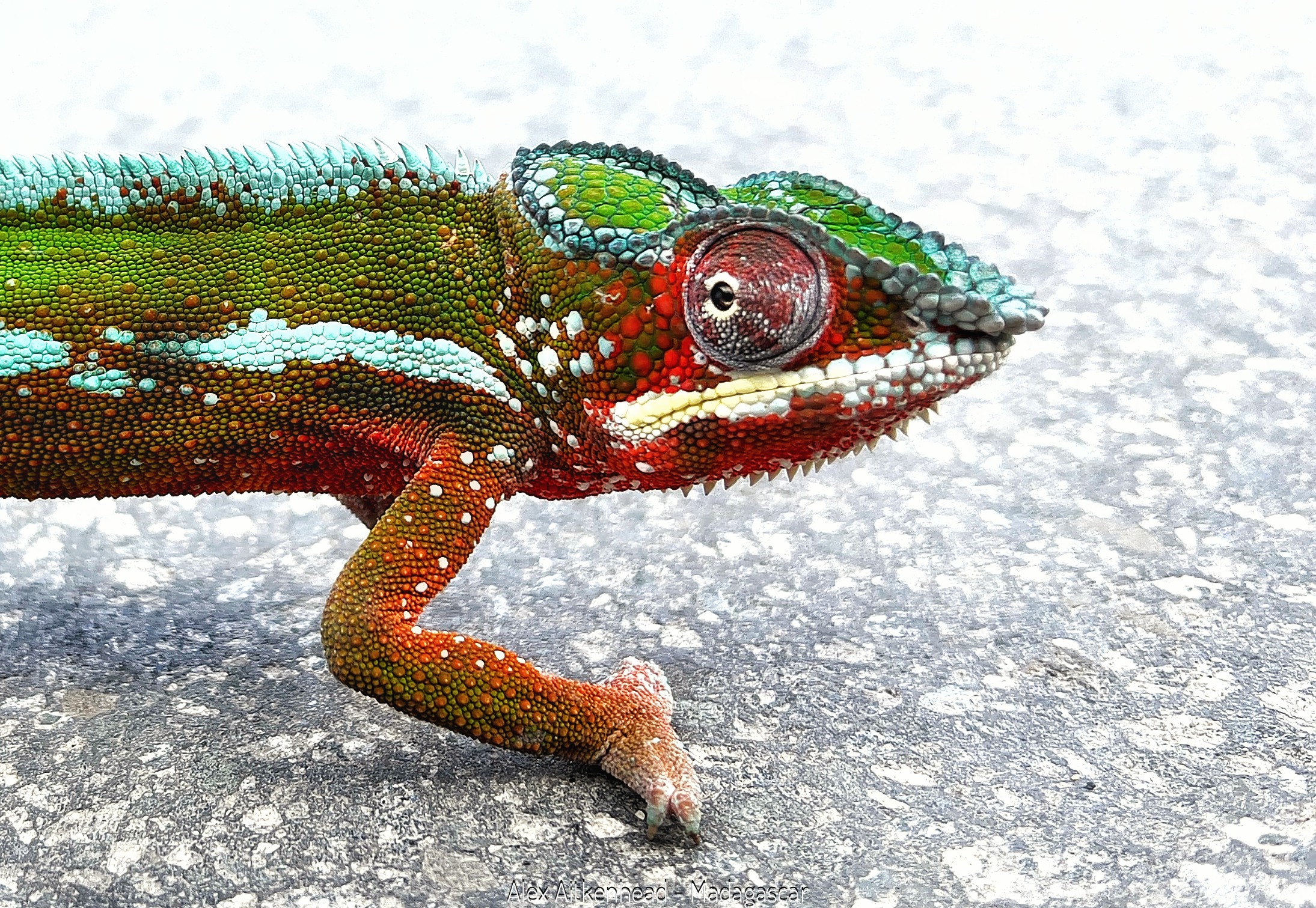
- Panther Chameleon (Furcifer pardalis): Known for its vivid colouration, which varies based on region.
- Dwarf Chameleons (Brookesia species): Some of the world’s smallest reptiles, with particular species measuring just over an inch in length.
Chameleons in Malagasy Culture
Chameleons hold a unique place in Malagasy folklore:
- The name “chameleon” is derived from the Greek words chamai (on the ground) and leon(lion), meaning “earth lion.”
- In some regions, chameleons are feared and associated with superstition.
- A well-known Malagasy proverb states: “Like the chameleon, one eye on the future, one eye on the past.”
Conservation Challenges
Chameleons in Madagascar face multiple threats, including habitat loss due to deforestation and illegal collection for the pet trade. Conservation efforts focus on habitat preservation and sustainable wildlife management to protect these unique reptiles.
Wildmadagascar.org


The Giant Oustalet’s Chameleon (Furcifer oustaleti)
The Giant Oustalet’s Chameleon (Furcifer oustaleti), or Malagasy giant chameleon, is Madagascar’s largest chameleon, reaching up to 27 inches (68.5 cm) long, known for its adaptability across diverse habitats from dry forests to villages, its slow, camouflaged movement, and a rapid, projectile tongue used to catch insects, small reptiles, and even birds, with females generally more colorful than the grey/brown males.
Key Characteristics:
- Size: Can be the world’s longest chameleon, though slightly less heavy than Calumma parsonii.
- Appearance: Males are usually drab grey/brown, while females boast vibrant greens, yellows, and reds, with blue eyelids.
- Adaptation: Highly skilled at camouflage, blending into foliage or even human-modified areas like villages.
- Hunting: Uses its independently moving eyes for 360-degree vision and a lightning-fast, sticky tongue to catch prey.
- Diet: Insects, lizards, small birds, and even fruit.
Habitat & Behaviour:
- Endemic to Madagascar: Found throughout the island in various habitats.
- Lifestyle: Largely sedentary, conserving energy, and solitary, displaying aggression through colour changes.
- Unique Features: Possesses a dorsal crest of spines and a prehensile tail for gripping branches.
Conservation Status:
- While adaptable, they are a significant part of Madagascar’s unique biodiversity, highlighting the importance of protecting their varied environments.


Parson’s chameleon (Calumma parsonii )
Calumma parsonii
Parson’s chameleon
Geographic Range
The Parson’s chameleon, Calumma parsonii, is limited in distribution to the eastern side of the island of Madagascar. Parson’s chameleon includes two distinct subspecies, Calumma parsonii cristifer and Calumma parsonii parsonii, both of which live within a few kilometres of each other.
Biogeographic Region: Ethiopia native Other Geographic Terms: island endemic
Habitat
Parson’s chameleon is native to the wetter forests of Madagascar’s elevated eastern areas (maximum altitude of 2134 meters) but can be found at lower elevations along the coast. The lower coastal regions, as well as the elevated (forest-canopy) regions, remain warm and humid year-round, with average temperatures of 27 to 32 degrees Celsius. Chameleons typically live in hot, moist environments, but can tolerate the cooler temperatures in Madagascar. In the eastern region of Madagascar, the average year-round temperature is usually 20 to 28 degrees Celsius. Rainfall within their habitats can reach 381 cm per year. Their range is widespread throughout the rainforests of Madagascar.
The two subspecies of Parson’s chameleon differ slightly in their habitat preferences. Calumma parsonii cristifer primarily occurs in primary, or unharvested, forests in the higher mountains, whereas Calumma parsonii parsonii inhabits cooler, less dense forests at lower elevations.
Habitat Regions: tropical Terrestrial Biomes, rainforest
Range elevation
0 to 2134 m
0.00 to 7001.31 ft

Physical Description
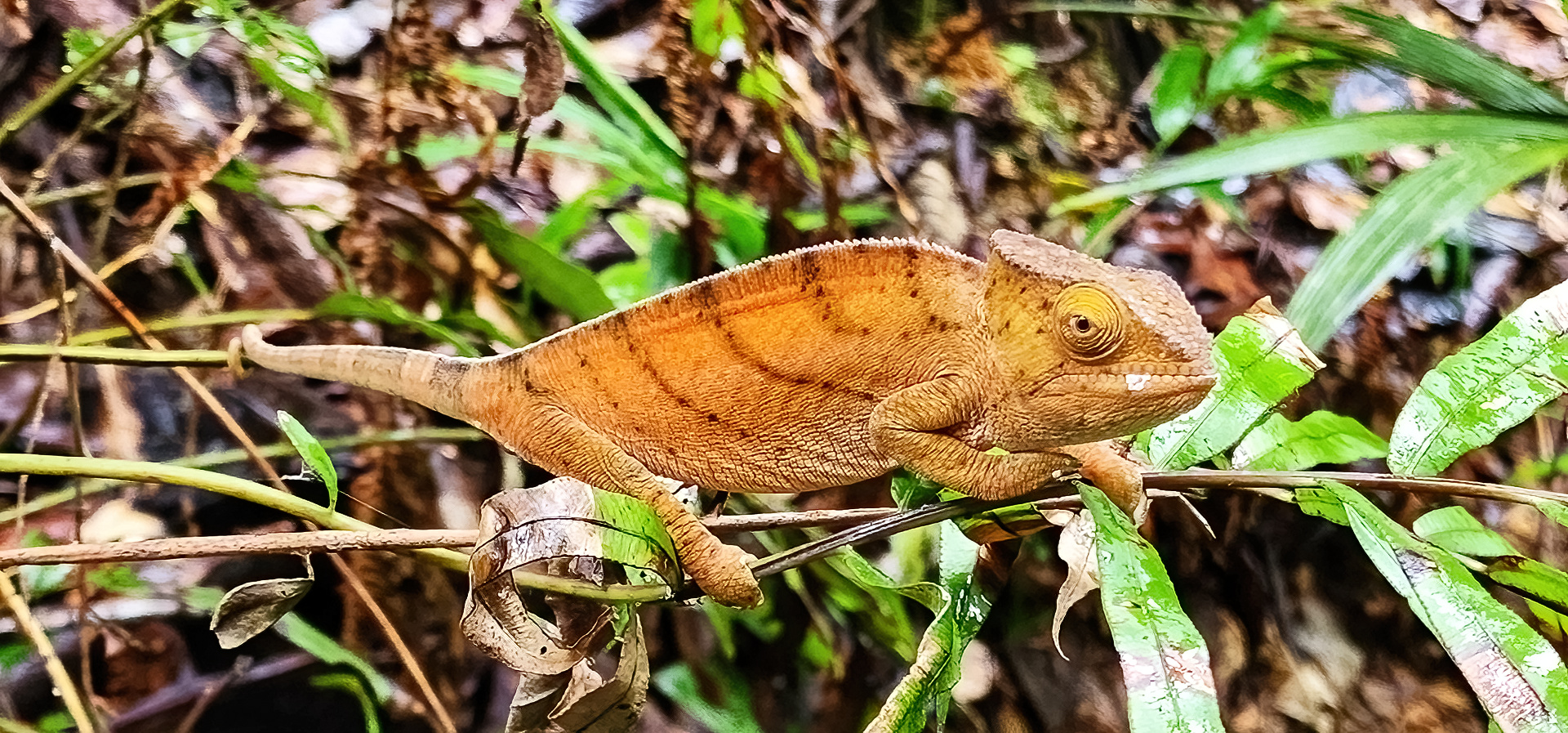
Parson’s chameleon is the largest species of all extant chameleons. This species exceeds 60 cm in total length at maturity, with snout-vent length averaging 20-30 cm. This species may weigh upwards of 700 g at maturity. Parson’s chameleon has a Pinocchio-like appearance due to the larger nasal appendages. Their garish noses make them easy to identify as a species. Males have been known to have forked noses or, very rarely, a pair of noses. Male colouration is also described as brighter or bolder than that of females.
Parson’s chameleon includes two subspecies: Calumma parsonii parsonii, which has less noticeable colours, also has no dorsal crests and may reach up to 68 cm in length. Calumma parsonii cristifer has more blue hues on its body, a dorsal crest and may reach up to 47 cm in length. Parson’s chameleon is equipped with two front and two back legs, in which both the front and back limbs contain toes that are zygodactylous; two toes point forward, and two toes point backwards. Their limbs assist with both stable walking and climbing.
Parson’s chameleon has very noticeable eyes due to their bright orange colour, contrasting with their green skin. These are very distinct, as their lower and upper eyelids are joined. This minimises the area that the pupil can be exposed to light. The eyes have the ability to focus on two dissimilar items concurrently and have a field of vision encompassing all 360 degrees.
Although chameleons lack a visible ear, they are not thought to be deaf. Like most lizards, Parson’s chameleon is equipped with an exceptionally long tongue that can be rapidly extended to catch prey. A chameleon’s long tongue can be up to two times its body length.
Parson’s chameleons are ectothermic, regulating their body temperature by remaining stationary for periods of time and prolonged basking in the sun.
Other Physical Feature: ectothermic, sexual dimorphism, sexes colored or patterned differently
male more colourful
sexes shaped differently
Average mass
700 g
Average length
60 cm

Development
Female Parson’s chameleons typically climb down from their tree homes and bury their eggs underground. Females lay 20-60 eggs, which incubate for a year, occasionally up to two years. Hatchlings use their single egg tooth, a temporary tooth-like “spear” on their nose, to cut through the eggshell. The offspring emerge headfirst, and the egg tooth falls off soon after birth. Parson’s chameleons hatch within a week of each other in the same brood. Unique colouration and specific markings on offspring are not observed until about 5 months, which is also when the sex is likely distinguishable. Juvenile Parson’s chameleons are typically terracotta-colored. Males have been noted as having bolder colours, whereas females show more dull, earth tones. Offspring are sexually mature by year three. Chameleons continue to grow throughout the entirety of their life. However, the rate of growth is highest for younger chameleons, and shedding occurs more often. When shedding occurs, the epidermis “cracks” and new skin cells underneath push through to the surface. This old skin dries up, hardens, and breaks off.
Development – Life Cycle: Indeterminate growth

Reproduction
Parson’s chameleon is polygamous, with females mating once per year. Usually, the breeding season is around 3 months after winter, which, in Madagascar, is May through October. Males usually initiate the first exchange. Male and female tails intertwine during copulation. Males will leave females when they are no longer able to get pregnant. In a captive study, males were found to be dominant and guarding.
During the mating season, male chameleons will follow and guard the female at close range. In a wild study, both males and females moved together throughout their home range. Males may guard more than one female during the breeding season. However, they refuse to guard more than one at a time.
Females have a gestation period of 3 – 5 months. Females then dig their holes, lay eggs, bury them and leave.
Mating System polygynous
Parson’s chameleons have been observed to have only 1 clutch per year. Females lay eggs, about 20-60, in a small hole dug in the ground away from their tree home. Eggs incubate up to two full years and can triple in size by the end of incubation. Offspring use a minuscule cranial protrusion called an egg tooth to break through the egg. Parson’s chameleons breed late in their life cycle, becoming sexually mature by 3 years old. Copulation begins 3 months after winter dormancy, beginning in January and onward. The entire mating season lasts up to 8 weeks after winter is over. The gestation period is from three to five months. Offspring can weigh up to 4 grams but range from 1 – 4 grams. The eggs, on average, have a width of 1.5cm and a height of about 2.5 cm.
Key Reproductive Features: seasonal breeding, sexual, oviparous
Breeding interval
Copulation begins 3 months after winter dormancy, and the entire mating season lasts up to 8 weeks after the breeding season has begun
Breeding season
Post-winter: October, November and December
Range number of offspring
20 eggs to 60 eggs
Range gestation period
3 to 5 months
Average time to independence
0 minutes
Range age at sexual or reproductive maturity (female)
3 to 5 years
Average age at sexual or reproductive maturity (female)
3 years
Range age at sexual or reproductive maturity (male)
3 to 5 years
Average age at sexual or reproductive maturity (male)
3 years
Female Parson’s chameleons leave their eggs after laying them and do not return. After a one- to two-year incubation period, the eggs begin to hatch. There is a single clutch each year that female Parson’s chameleon mates. Chameleons have been documented to hatch within a week of each other. Because the female is not present at hatching, these tiny chameleons are on their own from the beginning. Though they lack parental guidance, the offspring of Parson’s chameleon often hatch and will stay together as a group.
Parental Investment: No parental involvement
precocial
Lifespan/Longevity
In the wild, researchers estimate that Parson’s chameleon is known to live 4 to 10 years. Lifespan is limited in the wild by deforestation as well as over-collection. Habitat loss is the main contributor to the very slight population decline.
In captivity, Parson’s chameleon has been documented to only live up to 4 years. Lifespan in captivity is vastly different and therefore limited by the species being unable to adapt reproductively to its living environment.

Behavior
Chameleons have the discernible trait of changing skin colour. They accomplish this feat by employing specialised pigment cells called melanophores. Melanophores, a type of chromatophore, contain melanin, which controls the amount of light that gets reflected. Chromatophores, the layers of skin cells, respond to chemicals from the bloodstream as well as the nervous system. Colour changes can be due to external responses, light sensitivity and temperature, as well as internal responses. Examples of internal responses include physical health, hormonal response to the presence of the opposite sex, and stage of sexual maturity. The colour intensity is dictated by granules when signalled by the brain. Parson’s chameleon males and females go from dark brown to bright green, with formations of line patterns appearing and disappearing.
Parson’s chameleon is arboreal and rarely on the ground. The arrangement of digits on their feet enables them to cling to trees with their tails acting as a fifth limb. Sharp claws on their front feet are used by females to dig tunnels for egg- laying. Parson’s chameleons are typically inactive and wary of the world around them. Males engage in dramatic territorial displays but are otherwise passive.
During courtship as well as species recognition, males often change their colour in an aggressive territorial manner. Parson’s chameleons regularly use their tails to communicate, too. Males have been known to coil their tails up tightly and then whip them forward during some escalated aggression periods. Females are easily stressed and display yellow blotches distributed over the head and body.
Being ectothermic, Parson’s chameleon regulates its body temperature by basking in the sun. This species basks in the sun for up to 20-minute time increments before it moves back into the shade. Chameleons normally seek places to rest near dusk on the same tree they stayed in all day.

Key Behaviours: arboreal, scansorial
diurnal, motile, daily torpor
solitary
Range territory size
1 to 12 m^2
Home Range
Parson’s chameleon rarely departs from the tall tree it occupies during the day. It basks in the sun then moves to the shade, all on the same branch. The home range could be anywhere from 1 to 12 square meters, depending on tree height.
Communication and Perception
Parson’s chameleon is a colour-changing lizard. It contains skin cells that have two differently colored pigments in them. Colour-changing is a way for chameleons to communicate their mood and feelings, as well as their body temperature. Colour change has also been spotted during mating: females change colour to prove to males they are mature enough to mate. Male chameleons guard and defend females during breeding season by following the female wherever she goes; once a male finds its mate, all other males are deemed intruders. Chameleons are equipped with very distinctive eyes. This species can move its single eyeball at once. Unlike most species that employ a “plus” crystalline lens, this chameleon has a “minus” crystalline lens. In this case, light is not focused properly. Normally, an animal has a plus lens converting light rays into focused images. The union of their extraordinarily powerful cornea lens in addition to the diverging minus lens creates a sort of Galilean telescope. Although Parson’s chameleon lacks an external organ for hearing, this species feels vibrations and can “sense” sounds through their internal sensor. Chameleons have been documented to pick up narrow sound ranges from 200 Hz to 600 Hz. They may also create extremely low vibrations, similar to purring, that are thought to be a way of communication through species.
Communication Channels: visual, Other Communication Modes: mimicry, vibrations, Perception Channels: visual, vibrations

Food Habits
Chameleons are stationary ambush predators. Parson’s chameleons are omnivorous, devouring most plants, insects and possibly small birds. They are primarily listed as insectivores because their diet mainly consists of mantis (Mantodea), large beetles including tiger beetles (Cicindelidae), as well as most ground beetles (Carabidae), moths including the Madagascan sunset moth ( Chrysiridia rhipheus ), and roaches including the Madagascar hissing cockroach ( Gromphadorhina portentosa ). They have been speculated to eat small mammals and birds. They utilise their prehensile tail as an anchor by fastening themselves to trees or branches while they search for and devour prey.
The Parson’s chameleon captures its prey by shooting out their sticky projectile tongue. Their tongue acts as a suction cup; once prey is attached, it is not coming off. Food is seized and swallowed almost whole. While their eyes move, their bodies do not because they have the ability to scan their entire habitat with independently moving eyes. A chameleon’s lack of movement, as well as its environment-adapted skin change, enables the predators to completely catch prey off guard.
Parson’s chameleons congregate at certain times of the year. For example, when coffee plants are blooming, they can be found on the coffee plants waiting for insects, like the turnip moth ( Agrotis segetum ).
Primary Diet: Carnivore, Insectivore, eats non-insect arthropods
herbivorelignivore
Omnivore Animal Foods birds
mammals
Plant Foods leaves
wood, bark, or stems
Predation
If a predator were to approach a Parson’s chameleon located on a branch, it would simply let go, drop to the ground and play dead. Rarely do chameleons scurry, but if a predator is seen approaching, it can move quickly. All moving objects must be analysed as a potential threat. Chameleons’ telescope-like and individually moving eyes allow a 360-degree view of the world.
Successful predators of Parson’s chameleon include large birds such as buzzards, eagles, hawks, coucals (Centropus), shrikes, hornbills (Family Bucerotidae), and owls. Snakes also prey upon this species.
Anti-predator Adaptations cryptic
Known Predators
buzzards, eagles, hawks, shrikes, hornbills, owls
banded kestrels (Falco zoniventris )
Madagascar coucals (Centropus toulou )
boomslangs (Dispholidus typus )
big-eyed snakes (Mimophis mahfalensis)
Ecosystem Roles
By preventing the overpopulation of particular insects and small invertebrates as well as providing nourishment for larger reptiles, the role that Parson’s chameleon plays in the ecosystems of Madagascar is that of both predator and prey.
One documented study noted that the nematode endoparasite Hexametra angusticaecoides was found in Parson’s Chameleons. One of the first hosts of Hexametra angusticaecoides larvae is a cockroach, Periplaneta orientalis. Parson’s chameleon then ingests the cockroach that contains the second-stage larvae, which cling to the host and initiate growth. This study was inconclusive on the effects of the parasite Hexametra angusticaecoides in Parson’s chameleon.

Commensal/Parasitic Species
- Hexametra angusticaecoides , a nematode
Economic Importance for Humans: Positive
Parson’s chameleon is sometimes traded as a pet. This species is of interest to dedicated reptile enthusiasts. The pet trade has become increasingly popular, though the luxury of owning a Parson’s chameleon tends to thwart the regular reptile owner. It is expensive to own a chameleon, but due to Parson’s chameleon’s large size, they require extra effort, food, caging and space. The average price for a Parson’s chameleon ranges from $1500 – $3000, and it is unknown how most potential owners obtain them. There are no legally established captive-breeding programs currently available. Legal issues in owning this pet are still murky.
Positive Impact on trade
Economic Importance for Humans: Negative
The only adverse effects of Parson’s chameleon for humans are that the trade regulation has subdued the import and export of this species, potentially creating financial dilemmas for existing traders in the United States and Madagascar.
Conservation Status
Parson’s chameleon is classified as Near Threatened (NT) on the IUCN Red List. It is listed on Appendix II of CITES, meaning the species is being noted as not necessarily threatened with extinction, but has the possibility of extinction if trade of this species is not kept regulated. A cause of the Parson’s chameleon’s slight decline is the anthropogenic transfer of this species from country to country. Another possible cause of this species’ decline could be the collapse of Madagascar’s natural fauna and flora due to human influence on rainforests.
To help this species recover, strict procedures of trade are being upheld. Madagascar is found to be the main export country while the United States is the main import country of Parson’s chameleon. CITES noted that Parson’s chameleon has not been legally traded since 1995, the year when restrictions on the chameleon’s mass import came into play.
Chameleons are actually very stationary creatures, but will climb through plants and trees if they feel it’s completely necessary. The name chameleon is derived from the Greek words “chamai”, which means ‘on the ground’ or ‘on the earth’, and “leon”, which means lion. Chameleons are literally called “earth lions”.
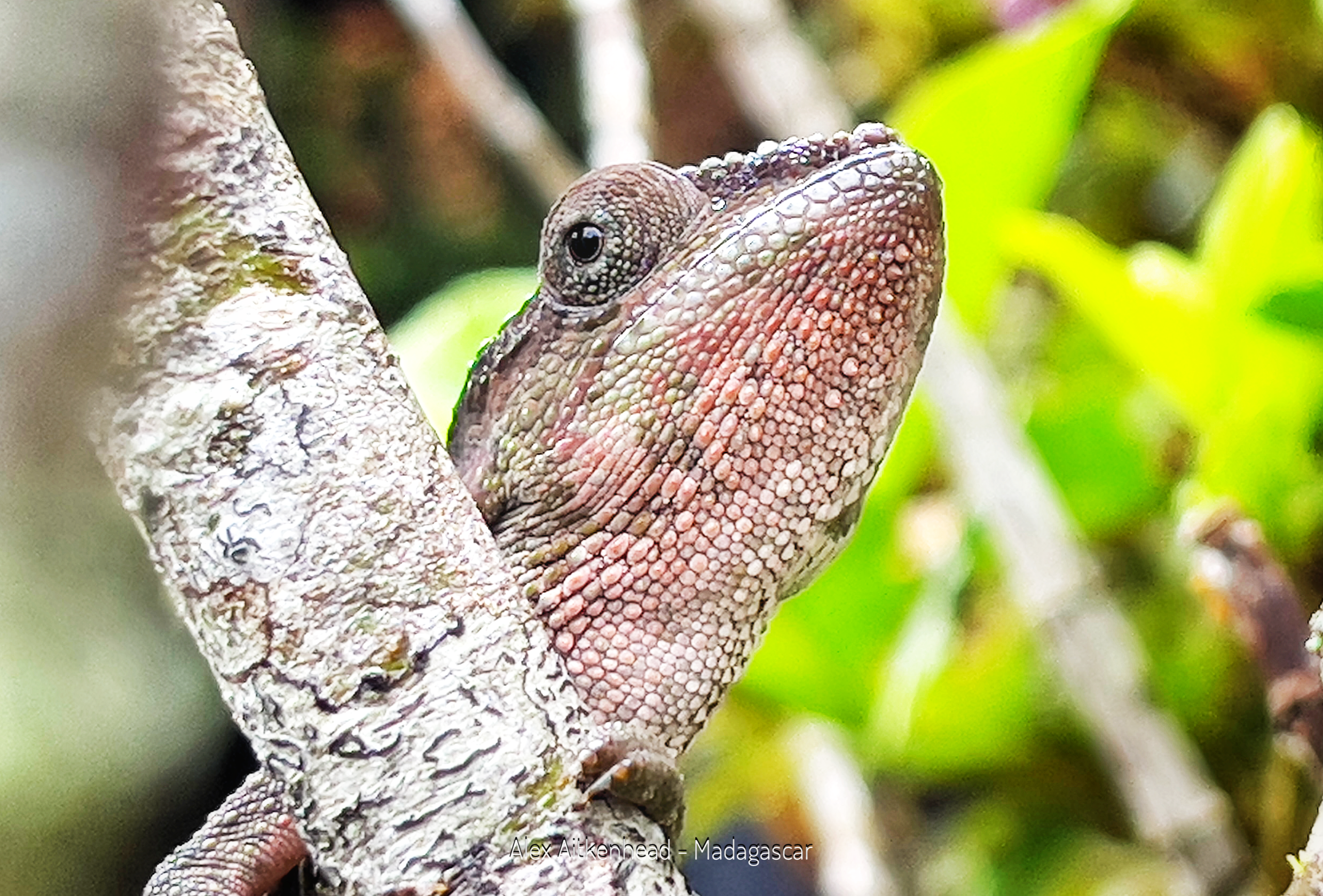
Here are ten interesting facts about Chameleons:
- They don’t just change colour for camouflage
Chameleons change colour mainly for communication, temperature regulation, and mood—not just to blend into backgrounds as many people think. - Their eyes move independently.
Each eye can rotate and focus separately, allowing chameleons to look in two different directions at once and scan for both prey and predators. - They have an incredibly fast tongue.e
A chameleon’s tongue can shoot out in about a hundredth of a second and can be longer than its body, allowing it to catch insects from surprising distances. - Their feet are like built-in grappling hooks.
They have zygodactylous feet—two toes pointing forward and two backwards—giving them a strong grip for climbing branches. - Their tails act like a fifth limb
The tail is prehensile, meaning it can wrap around branches to help with balance and stability while climbing. - They can see ultraviolet light
Chameleons can perceive UV light, which helps them detect signals and patterns that are invisible to humans. - They are mostly solitary animals.als
Most chameleons prefer to live alone and can become aggressive toward others of their species outside of mating. - They “talk” with colour signals.
Bright colours can signal dominance, stress, readiness to mate, or warnings to rivals. - They have specialised skull shapes.s
Some species have helmet-like structures or crests on their heads, which can play roles in species recognition and mating displays. - They are found mostly in Madagascar.
While they also live in parts of Africa, southern Europe, and Asia, the greatest diversity of chameleon species is found in Madagascar.

Chameleons in Madagascar face a mix of natural and human-driven threats, and the biggest ones are actually not predators—but habitat destruction.
1. Habitat loss (the #1 threat)
The biggest danger is deforestation and land clearing for farming (especially slash-and-burn agriculture), charcoal production, and settlement expansion.
- Madagascar has lost a large portion of its original forests.
- Chameleons depend on specific forest structures (trees, shrubs, humidity), so when forests disappear, so do they.

2. Illegal pet trade
Many chameleon species are collected for the exotic pet market.
- Some are taken legally with permits, but illegal capture still happens.
- Wild collection can heavily reduce local populations, especially for rare species.

3. Predation (natural threats)
Chameleons are hunted by native wildlife, including:
- Birds of prey (like kestrels and serpent-eagles)
- Snakes (especially arboreal species)
- Some mammals, like the fossa (occasionally)
- Ants and invertebrates target eggs and hatchlings
Even though they are camouflaged, juveniles are especially vulnerable.

4. Fire and climate change
- Wildfires (often human-started) destroy forest habitat.
- Climate change increases droughts and fire risk, shrinking suitable environments further.

5. Pollution and pesticides
Chameleons are sensitive reptiles, and chemicals like pesticides can directly harm or kill them, especially in farming areas.

In short
The biggest threat is habitat loss, followed by pet trade pressure, with natural predators being a smaller but constant background danger.


You might also like


Leave a reply